
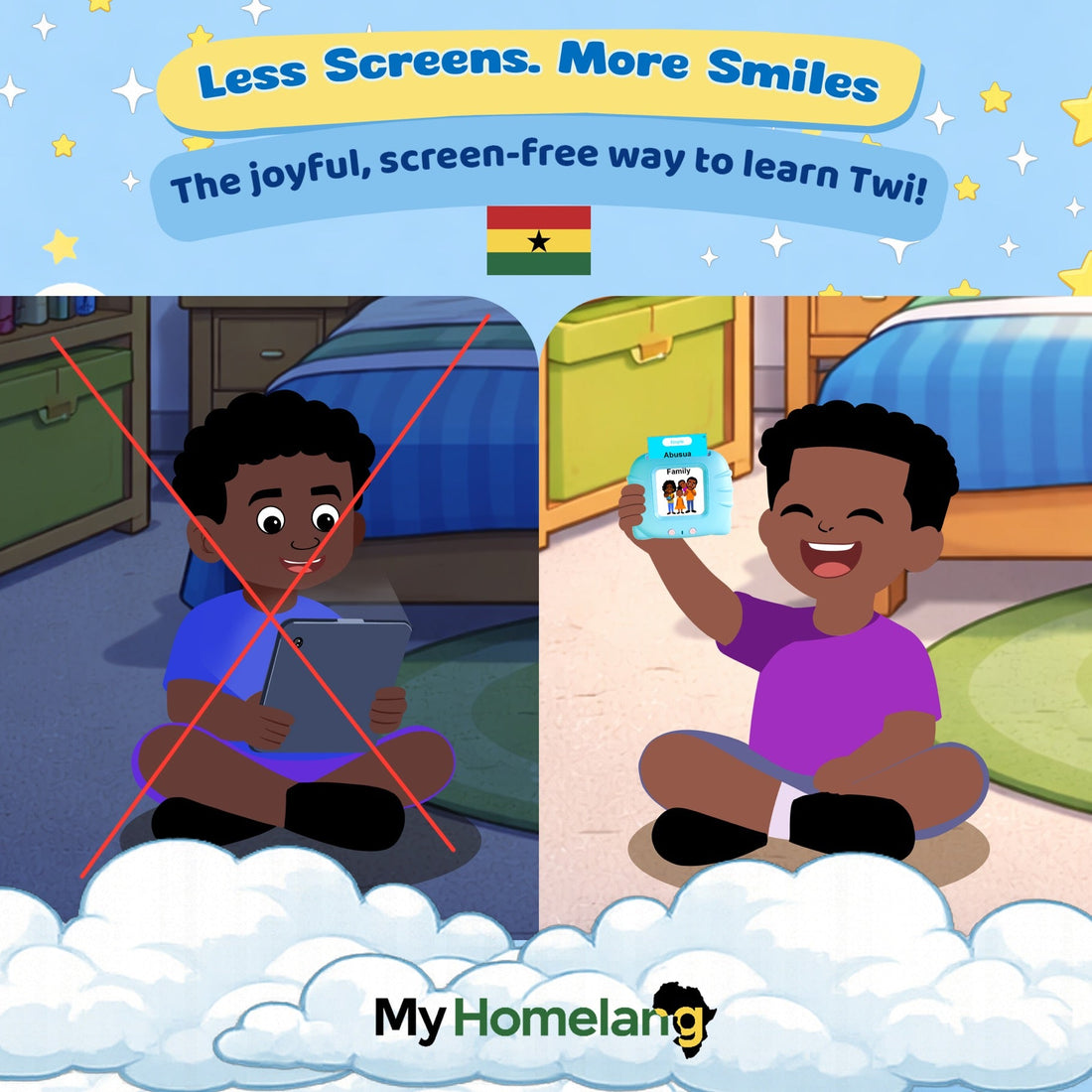
Screens are everywhere in modern life, from tablets and phones to televisions and computers. While technology can be useful, many parents are now looking for screen-free learning options that encourage creativity, interaction, and focus.
For young children, learning without screens can provide important developmental benefits.
Why Screen-Free Learning Matters
Improves Attention and Focus
Without the fast pace of digital screens, children are able to focus more deeply on the activity in front of them.
Encourages Active Learning
Screen-free tools require children to interact physically — inserting cards, listening to sounds, and repeating words. This active participation helps strengthen learning.
Supports Healthy Development
Reducing screen time allows children to engage more with their environment, their imagination, and the people around them.
Learning Languages Without Screens
Language learning is especially powerful when children can hear and repeat sounds naturally. Instead of looking at a screen, children can focus on the sound of words and practice pronunciation in a relaxed way.
Audio flashcard devices are a great example of screen-free learning tools. They allow children to press, listen, and repeat words, creating a playful learning experience that feels like a game rather than a lesson.
A Simple Way to Build Confidence
When children learn through play, they become more confident in using new words. Over time, this confidence grows into real communication skills.
Screen-free learning helps create an environment where children can explore language naturally, develop curiosity, and build a strong foundation for the future.